

Au gratin potatoes are a French-inspired baked dish made with thinly sliced potatoes, cream, and plenty of cheese layered throughout — and yes, if you've seen "gratin dauphinois" on a menu, that's the same dish. The word "gratin" comes from the French verb gratter, meaning to scrape or grate, a nod to the browned, cheesy crust that defines it. The difference between au gratin and scalloped potatoes comes down to one thing: cheese in the layers. Scalloped potatoes are made with just a cream sauce, while au gratin takes it further by adding cheese directly into each layer, creating that signature golden, slightly crispy crust on top that nobody can resist. Same comfort food energy, but au gratin brings the drama.
Short answer: don't. Pre-shredded cheese is coated in starches and anti-caking agents that prevent it from melting smoothly, and you're not going to find gruyere in a bag at the grocery store anyway. Just grab the grater — it takes five extra minutes and makes a real difference in a dish where cheese is the whole point.
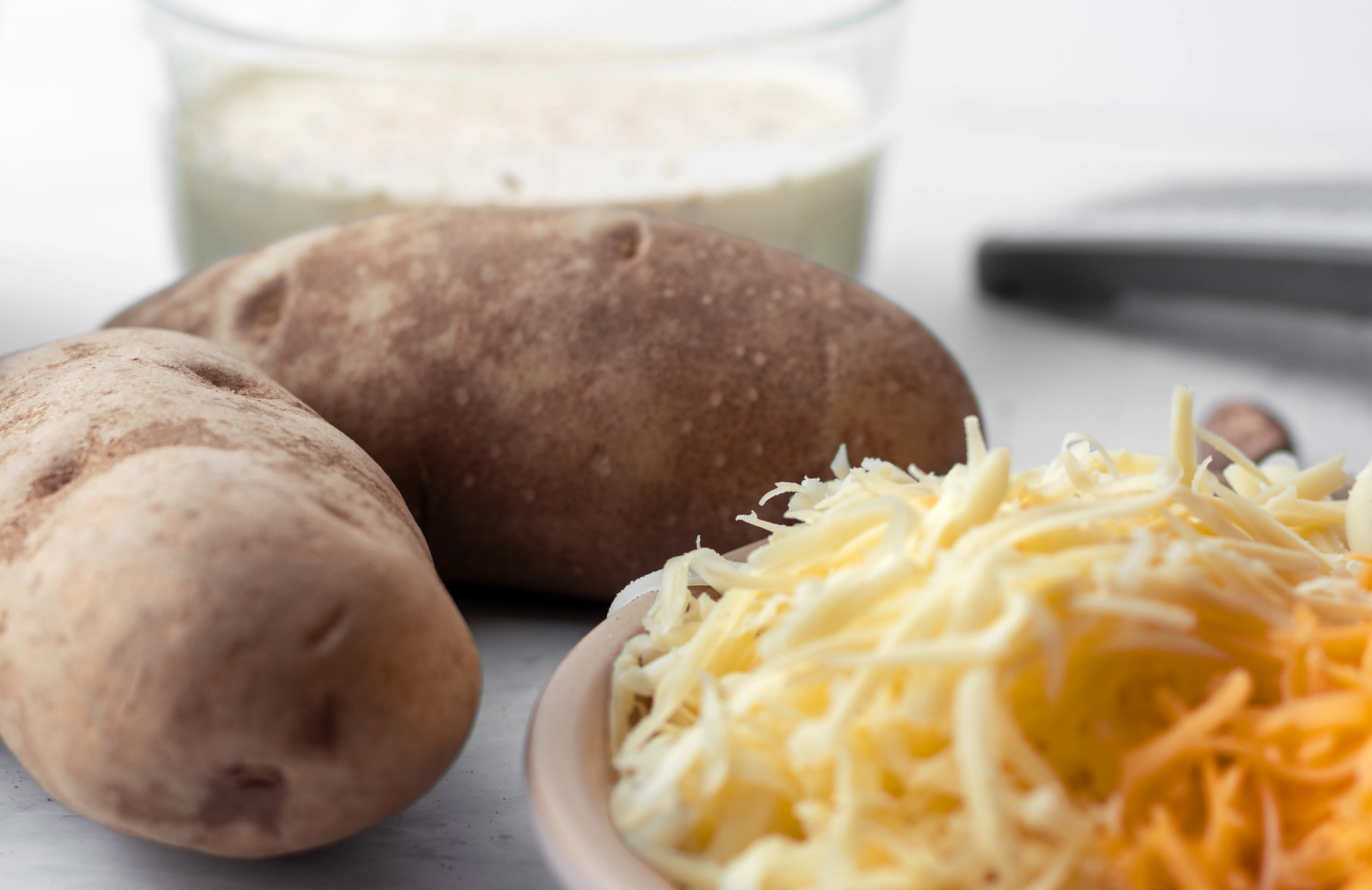
Russet potatoes are the move here. Their high starch content helps them absorb the cream as they cook, giving you that soft, almost silky texture in each layer. Waxy potatoes like red or Yukon gold hold their shape too well and won't give you the same result.
Gruyere and medium cheddar — gruyere brings a nutty, slightly sweet depth that makes the dish feel elegant, and cheddar adds that familiar sharpness that makes it feel like comfort food.
Heavy cream is non-negotiable. Half and half or whole milk simply won't do the job.
Freshly grated nutmeg is subtle, but it adds a warmth to the cream mixture that makes people wonder what that flavor is. Pre-ground works in a pinch.
Kosher salt gets used two ways here — mixed into the cream and sprinkled on the top layer before baking.
Fresh herbs are optional but highly recommended for finishing. Chives, thyme, or rosemary flowers all work beautifully and make the dish look as good as it tastes.
A mandoline is your best friend here — trying to achieve thin slices with a knife is way too time consuming and frustrating. Uniform thickness matters because uneven slices will take longer to cook, resulting in an unevenly done dish. If you're not assembling right away, keep your sliced potatoes submerged in a bowl of cool water to prevent browning.
Start with a layer of cream on the bottom of your baking dish — this prevents the first potato layer from sticking and gets the cooking started from the bottom up. From there, the pattern is simple: potato, cream, cheese, repeat.
Use about ½ cup of the cheese blend per layer and don't stress about making it perfect; the cream will settle everything into place as it bakes. Finish with your remaining cheese on top, sprinkle the last teaspoon of kosher salt over everything, and press it all down gently with your hands.
Start at 425°F covered tightly with foil — the high heat and trapped steam is what gets the potatoes cooking all the way through before the top has a chance to brown. After 40 minutes, pull the foil, drop the oven to 400°F, and let it go until the top is deeply golden, bubbly, and a knife slides through the center with no resistance. And whatever you do, don't skip the rest. A full 40 minutes out of the oven before cutting allows the cream layers to set up so everything holds together when you slice into it. Cut too soon and it'll be a delicious but soupy mess.
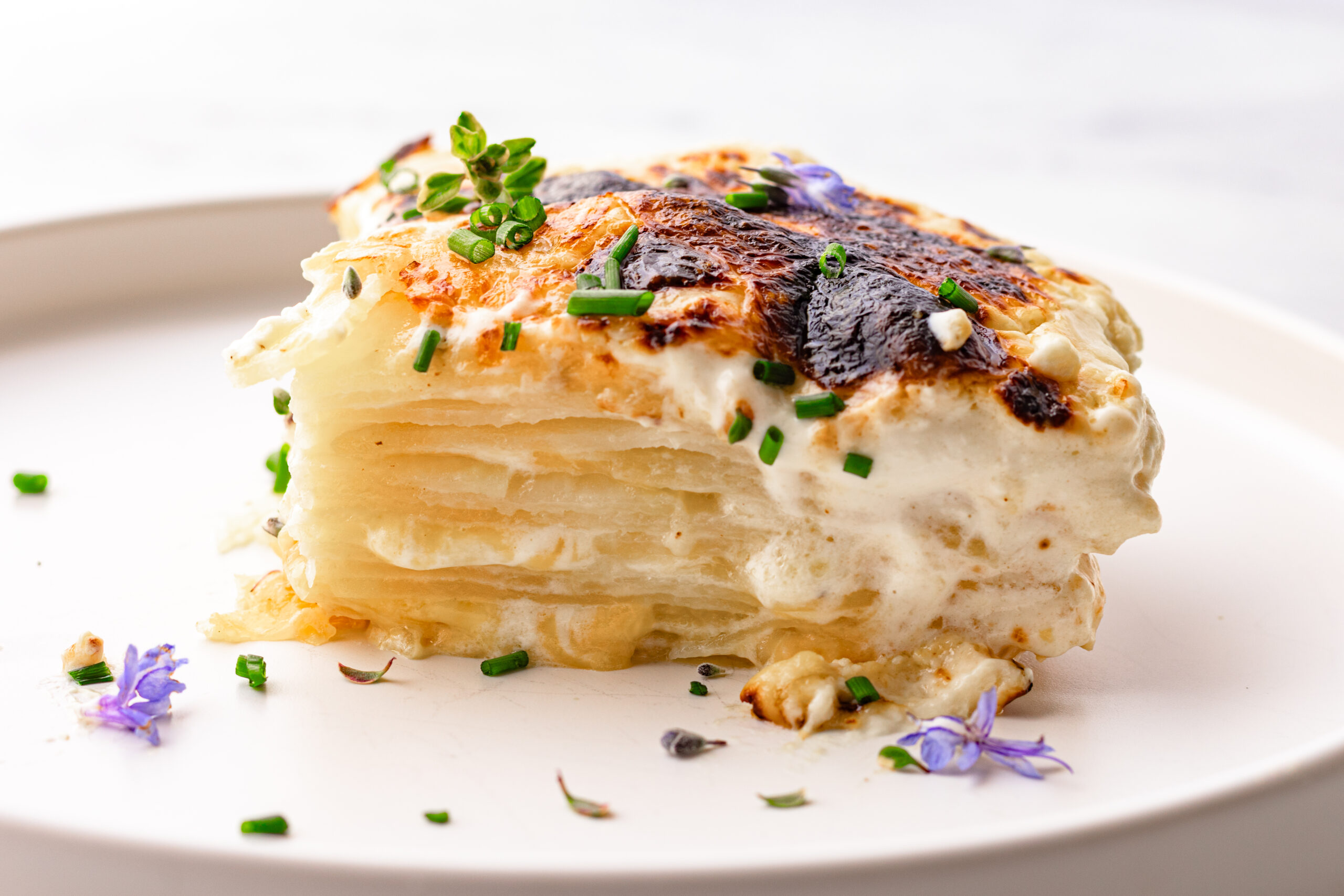
Au gratin potatoes pair beautifully with just about any protein — think roasted chicken, beef tenderloin, or a simple green salad if you're keeping things light. Leftovers store well in the fridge for up to four days; reheat covered with foil in a 350°F oven until warmed through to keep the layers from drying out and sauce separating.
This one is for the potato lovers. Four layers of paper-thin russet potatoes tucked into a nutmeg-kissed heavy cream with gruyere and cheddar melted throughout — no roux needed, just layer, bake, and try not to cut into it before the rest time is up.
An 11x9 casserole dish fits exactly 4 layers of ⅛-inch sliced potatoes. Do not use pre-shredded cheese — the anti-caking coating prevents proper melting. Hand shredding both cheeses right before assembling makes a noticeable difference.
Thank you for exploring my recipes!