

This 20 minute salsa verde strikes the perfect balance between bright and savory flavors. You have the option to either roast your vegetables or quickly simmer until tender. Both recipe methods are quick and consistently delicious. The natural tartness in tomatillos is a perfect way to bring acidity to any favorite Mexican dish and beyond.
Spanish colonization enriched the traditional indigenous recipe with ingredients like garlic and onions, which most Americans are familiar with. Over centuries, cooking methods expanded beyond the raw preparation in molcajetes - introducing techniques like roasting, which adds smoky depth, and boiling, which offers a mellower flavor profile.
Then, electric blenders revolutionized salsa making as well, allowing for textures ranging from chunky to silky smooth, though many traditionalists still prefer the distinctive texture achieved with a molcajete.
Today's salsa verde, or any salsa, exemplifies the dynamic nature of Mexican cuisine, with each household developing its own signature versions. The key to a memorable salsa verde lies in understanding ingredient ratios - balancing the tart brightness of tomatillos with the heat of chiles, the pungency of alliums like garlic and onion, and the fresh herbaceousness of cilantro. A well-crafted salsa verde should complement rather than overwhelm the main dish, adding layers of flavor that enhance what you are eating.
When shopping for tomatillos, focus on size and color. I typically go for a smaller size that is about an inch in diameter. These sized fruits typically offer a more concentrated, vibrant taste with pronounced citrus-like notes and less starchiness than larger ones. Carefully peel back the husk and look for fruits with a bright, darker green color. Don't worry about the sticky residue you'll find - it's natural and washes off easily.
Avoid any that show yellowing (overripe), pale coloring (underripe), or dark spots (decay).
The foundation of this salsa's pepper profile comes from the Poblano, a dark green chile with subtle heat and rich, earthy undertones. Its moderate spice level provides depth without overwhelming heat, making it the perfect base pepper.
For adding heat, you can choose a fresh jalapeño, serranos, or habaneros. When selecting these spicier peppers, look for "corking" - the natural woody streaks or light brown scarring on the pepper's skin. These marks are particularly common in field-grown seasonal peppers rather than greenhouse varieties which indicate a pepper that has developed under optimal conditions. Peppers with corking typically offer more concentrated flavor compounds and higher capsaicin levels, resulting in both enhanced taste and increased heat.
Tip: Start with a smaller amount of your chosen hot pepper and adjust to taste - you can always add more heat, but you can't take it away once it's blended into your salsa!
Traditionally Mexican salsa always use white onion. Sometimes I opt for a sweet onion if I want a more mellow onion profile. I never use red onions.
Ensure your cilantro is fresh and hasn’t seeded. Seeded cilantro refers to cilantro plants that have begun to bolt (produce flowers and seeds). If the plant has bolted it becomes significantly taller and more leggy with smaller, finer leaves that can look wispy like dill.
After roasting or boiling, it is recommended to cut the garlic open and remove the green sprout in the middle as it is bitter and pungent in flavor.
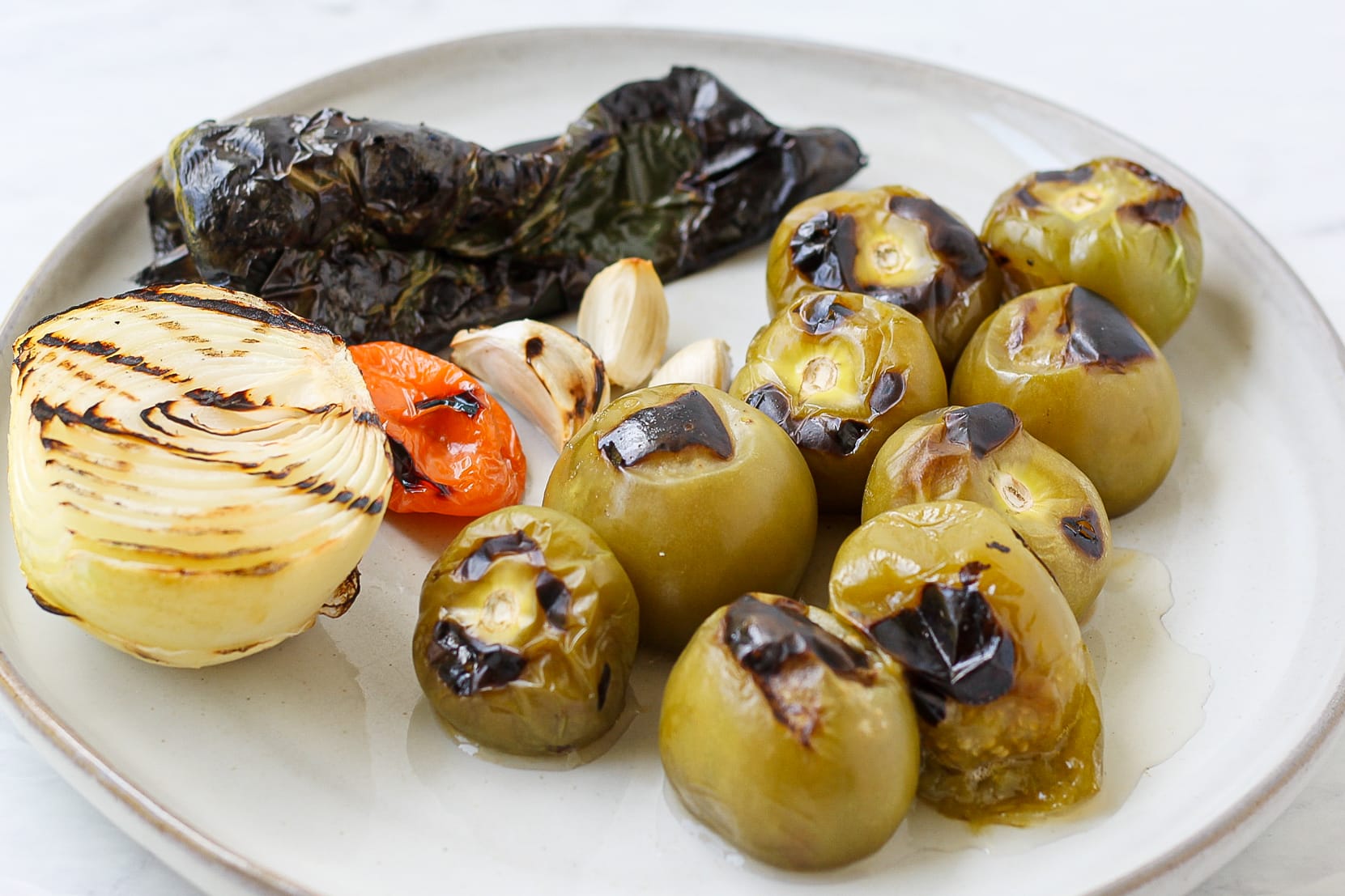
Transfer the cooled, cooked vegetables (except your chosen hot peppers) to a blender. Pulse until the mixture reaches a uniform consistency. Now comes the customization: add fresh cilantro, salt, and the cooked hot pepper, along with optional raw peppers. Start with half of your hot pepper, blend, and taste. Continue adding more pepper, salt, and cilantro in small increments until you achieve your desired balance of heat and flavor. Remember, you can always add more seasoning, but you can't take it away once it's blended.
Your tomatillo salsa will continue to evolve in flavor as it rests and cools down. You may need to adjust the salt content after the flavors have melded.
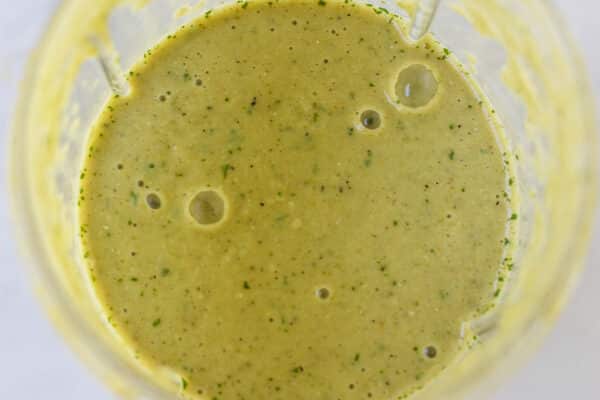
I personally love the Nutribullet for a thin salsa or enchilada sauce as this blender blends at high speeds. For a chunkier, meatier salsa, use a food processor or molcajates.
Store your salsa in a clean mason jar with a tight-fitting lid. The natural acidity of cooked tomatillos, combined with the other ingredients, helps preserve the salsa for up to two weeks when refrigerated at 40°F or below. The flavors will continue to develop and meld during the first 24 hours, making this salsa verde an excellent make-ahead option.
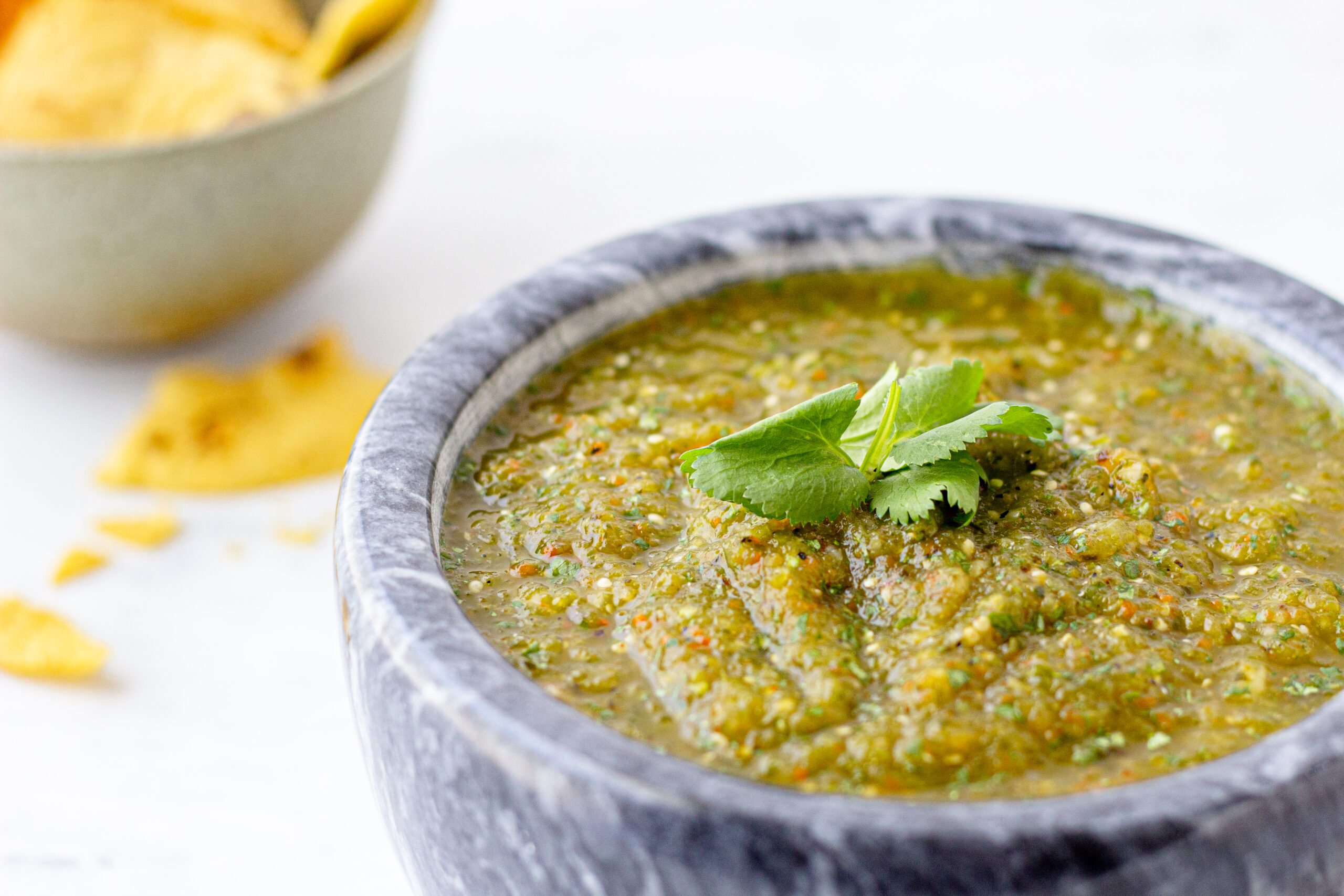
Chicken pairs excellently with salsa verde, but obviously, this will pair with almost any other Mexican dish. Great for seafood, too since it’s so vibrant and fresh. I tend to opt for salsa verde instead of a lime squeeze since tomatillos already obtain high acidity.
I hope you find that making salsa is fun and full of endless options. Don't be afraid to experiment! Give it a try and share your favorite versions with friends and family! Salsas are always a nice thoughtful gift to give.
Thanks to the natural acidity of tomatillos, this salsa stays fresh for up to two weeks when refrigerated, making it perfect for meal prep or gifting. Top your favorite tacos, turn into an enchilada sauce, or simply serve with tortilla chips. This is the kind of condiment that gets finished, not forgotten!
Thank you for exploring my recipes!